Lockheed Martin PAC-3 MSE Patriot interceptors
 GomSpace OBRIA NANO test satellite
 DevDroid Jericho cargo UGV
Brave1-Funded Amphibious Ground Robot Hauls Supplies 40 Kilometers on First Run
A Ukrainian mechanized brigade used a domestically developed amphibious ground robot, built with Brave1 grant money, to carry food and ammunition more than 40 kilometers over land and water.
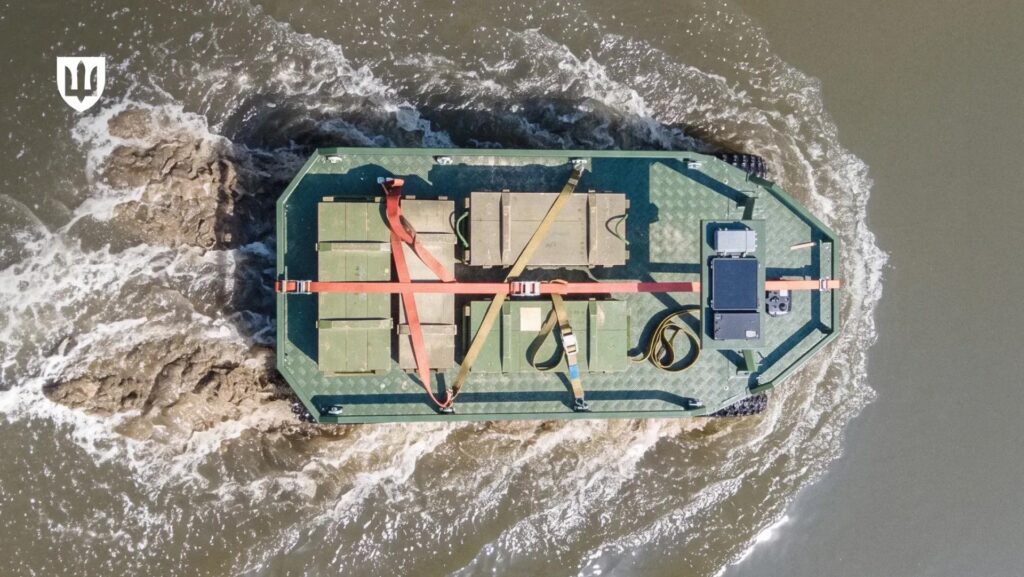
A Ukrainian-developed amphibious ground robot has carried out its first combat logistics mission, crossing more than 40 kilometers (25 miles) of land and water to bring food and ammunition to front-line positions, the Ministry of Defense said on September 29.
The run was made by troops from one of the Armed Forces’ separate mechanized brigades. The ministry did not name the brigade or the developer.
Rivers, canals, and marsh
Water is one of the harder problems for Ukraine’s ground robots. Rivers, canals, and marshland can slow or completely block the routes that conventional uncrewed ground vehicles use, and delivering by air is not always the best answer either, the ministry said.
The amphibious design lets one machine handle the whole trip. On land it keeps the cross-country mobility of a standard ground robot, and it can enter the water within seconds and keep going. That spares units from switching between vehicles or finding a crossing point under fire.
The system was refined over several months in close cooperation with the military, the ministry said, using lessons from real missions and the particular terrain of the front. Brave1, the state defense innovation cluster, backed its development with grant funding that helped get it into operational use.
A dedicated grant track
The project fits a broader push by the ministry and Brave1 to develop amphibious ground robots. In June 2026, Brave1 added a dedicated “Amphibious UGVs” track to its updated grant program, according to the ministry.
It also sits inside a much larger ground robot effort. By July, the Defense Procurement Agency had contracted more than 22,000 uncrewed ground vehicles for 2026, all made in Ukraine and nearly double the number for the whole of 2025, the ministry reported. Logistics robots made up the overwhelming majority, followed by engineering and then combat systems.
Use on the front has climbed as well. In June, units carried out more than 16,600 logistics and evacuation missions with ground robots, 122 percent more than in January. The ministry later said such missions had more than tripled since the start of the year, and Ukrainian defense authorities reported that ground robots carried out more than 100,000 logistics and evacuation missions between January and August, The Defense Post reported.
“We are expanding the capabilities of robotic systems so that Ukrainian service members have more technological tools to carry out combat missions,” the ministry said.
 JOINT VENTURES · 25 NOV
 JOINT VENTURES · 23 NOV